



In What Month Is Radon Highest in Arizona?
- Kaber Robinson
- May 30th, 2026

Quick answer: In most Arizona homes, radon runs highest from December through February, and January is the single month where readings tend to peak. Cool nights pull warm indoor air up and out, the house draws replacement air through the slab, and soil gas comes with it. Arizona is unusual though, because sealed up July and August homes with the air conditioning running can post readings just as high, which is why a single test in any one month never tells the whole story.
Why does January usually show the highest radon?
January is when Arizona homes are closed the longest. Overnight lows in the Valley drop into the forties, the heat cycles on, and warm air rises and escapes through the upper part of the house. That rising air leaves a slight low pressure zone at floor level, and the house pulls replacement air from wherever it can find it, including through slab cracks, plumbing penetrations, and control joints. Builders call this the stack effect, and it is the main reason radon gas concentrates indoors during cold weather. Higher elevation communities like Prescott, the Verde Valley, and Northern Arizona feel this harder than Phoenix does, because the temperature gap between inside and outside is wider and lasts for months.
January is also National Radon Action Month, and the Arizona Department of Health Services offers free short term test kits to residents during the push. That timing is not a coincidence. State health programs schedule the campaign for winter because closed house conditions happen naturally then. Long exposure at elevated levels is what drives risk, and the symptoms of radon exposure do not show up for years, so the month you test matters a lot less than whether you test at all.
Is summer really a second peak in Phoenix?
Yes, and this is where Arizona breaks from the national pattern. In most of the country, summer means open windows and high air exchange, so radon drops. In Phoenix, summer means the exact opposite. Homes stay sealed for four straight months of 110 degree heat, the air conditioning runs almost continuously, and fresh air exchange falls to almost nothing. A house that never opens a window from June through September is holding soil gas the same way a Minnesota house does in February. That applies to nearly every home here, since more than 95 percent of Arizona houses sit on a concrete slab with no sump and no French drain, and slab homes have plenty of entry points even when the concrete looks perfect.
Monsoon moisture adds a second push. When storm water saturates the ground around a foundation, it forms a temporary cap on the soil surface, and radon that would have vented harmlessly into open air gets redirected toward the easiest opening available. That opening is often a crack in your slab. Falling barometric pressure ahead of a storm adds a little more suction. Research on paired winter and summer tests in North America found roughly a quarter of homes higher in winter and roughly a quarter higher in summer, with the rest showing little difference, and air conditioning use is the leading explanation for the shift. If you have wondered whether radon is common in Phoenix, the short version is that it is common enough to matter in every month of the year.
Arizona radon by season
| Season | Months | What is happening | Typical effect on readings |
|---|---|---|---|
| Winter | December, January, February | Heat cycles on, strong stack effect, house closed | Usually the annual high |
| Spring | March, April, May | Windows and patio doors open, high air exchange | Usually the annual low |
| Summer | June, July, August | Air conditioning sealed house, monsoon soil saturation | Often a second peak |
| Fall | September, October, November | Mild weather, mixed ventilation habits | Variable, often middle of the range |
There is no published month by month Arizona dataset that ranks all twelve months, so treat this as the pattern certified measurement professionals see in the field rather than a state statistic. The statewide numbers that do exist come from about 7,000 tested homes since 1993: an average of 2.9 pCi/L, with 26 percent of homes above the EPA action level of 4.0 pCi/L and a maximum recorded result of 55.8 pCi/L. Phoenix homes commonly land between 1 and 4 pCi/L, and some reach 10 to 30. Our guide to pCi/L levels breaks down what each range actually means for your family.
Does the month even matter if you follow the protocol?
Less than most people think, and this is the part that surprises homeowners. A valid short term radon test requires closed house conditions no matter what the calendar says: exterior doors and windows shut for 12 hours before the test starts and kept shut throughout, with the heating or cooling system running normally. Follow that protocol in April and you have created winter conditions on purpose. Skip it in January by leaving a patio door cracked and you have invalidated a test during the best month of the year.
Placement matters as much as timing. The detector belongs in the lowest lived in level, away from exterior doors, windows, vents, and drafts. Our guide on where to place a radon test walks through the room by room details for a slab home with no basement.
Should you use a short term or long term test?
| Short term test | Long term test | |
|---|---|---|
| Duration | 2 to 7 days | 90 days or more |
| Best use | Real estate deadlines, a fast first look | A true picture of what you breathe all year |
| Seasonal bias | High, captures one weather window | Low, averages across changing conditions |
| Closed house rules | Strict, required the whole time | Normal living, no special conditions |
| Common timing | January through February or July through August | Start in fall, run through winter |
If you are buying or selling, the inspection window decides the timing for you, and a short term test is the standard tool. Our page on radon testing during home inspections covers how that fits an Arizona escrow. If you are simply testing your own home with no deadline, a 90 day test started in October gives you a far more honest number than any single week can. Continuous radon monitoring goes a step further and shows you the daily swings as the seasons turn.
What if you already have a mitigation system?
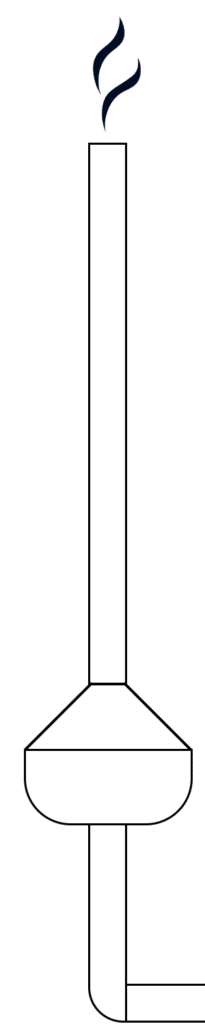
An active radon system with a working radon fan runs the same in January as it does in July, and a properly installed sub slab depressurization system does not care about the season. What can change is the fan itself. Fans wear out, manometer readings drift, and a system installed years ago may not be pulling what it once did. That is usually the real answer when homeowners ask whether radon comes back after mitigation. Check the manometer on the vent pipe a couple of times a year, and retest every two years or after any major foundation, HVAC, or remodeling work.
If you are weighing your options before installing anything, our breakdown of the best way to mitigate radon explains why active suction beats sealing alone on an Arizona slab.
Which Arizona communities should watch the winter months closest?
Radon hot spots in Arizona include North Scottsdale, Cave Creek, Tucson, the Verde Valley, Prescott, and Northern Arizona, where uranium rich desert soil and decomposed granite sit right under the slab. Homes in Cave Creek and the north Valley frequently test above the action level, and so do plenty of properties across Scottsdale. Newer subdivisions are not exempt either, which is why radon in new construction is worth understanding before you close on a West Valley build. You can see every city we cover on our service area page. Your neighbor’s result does not predict yours, so the only number that counts is the one from your own house.
If a winter test comes back at or above 4.0 pCi/L, or anywhere in the 2 to 4 pCi/L range the EPA says is worth considering, radon mitigation is straightforward on a slab home. Arizona Radon Mitigation is licensed and certified by the State of Arizona and the NRPP, and every job starts with a free estimate quoted after we look at your home’s size, layout, and slab. Nothing gets added later, and nobody pressures you.
Frequently Asked Questions
What month is radon highest in Arizona?
January is the month where indoor radon most often peaks, with December and February close behind. Cool nights create the stack effect that pulls soil gas through the slab while the house stays closed. High elevation areas like Prescott and the Verde Valley see the strongest winter effect.
Can I test for radon in the summer in Phoenix?
Yes, and summer is actually a decent time in Phoenix because your house is already sealed with the air conditioning running. That satisfies closed house conditions without any extra effort. Monsoon storms can push readings up further, so a summer result is rarely an underestimate.
Is a winter radon test more accurate than a spring one?
A winter test is more likely to show your home’s higher range, but accuracy depends on following the protocol, not on the month. A spring test done with the house properly closed is valid. A long term test of 90 days or more beats any short term test for knowing your real yearly average.
Do I need to retest every year?
Most homes do not need annual testing. Retest every two years, after a foundation repair or remodel, after HVAC changes, or if you have never tested during the winter months. You can find more answers on our radon FAQ page or reach out to us directly.
Does a radon system work as well in winter?
Yes. An active system with a working fan runs continuously and does not lose performance in cold weather. Check the manometer on the vent pipe a few times a year to confirm the fan is still pulling, and retest periodically to confirm the numbers are still where you want them.

Bio:
Kaber Robinson, a second-generation radon mitigator and the founder of Arizona Radon, has accumulated 30 years of experience in the industry. A nationally certified radon measurement and mitigation professional, Kaber’s commitment to health and environmental sustainability led him to the radon field after graduating from a renowned technical college in Kansas.
Gaining invaluable experience with a leading radon mitigation company in the United States, he traveled extensively to install systems across various environments. Today, Kaber applies his extensive knowledge and practical skills at Arizona Radon, where he ensures that each project adheres to the strictest standards of quality and safety.